How sportsbook margin actually forms — and why it swings so much
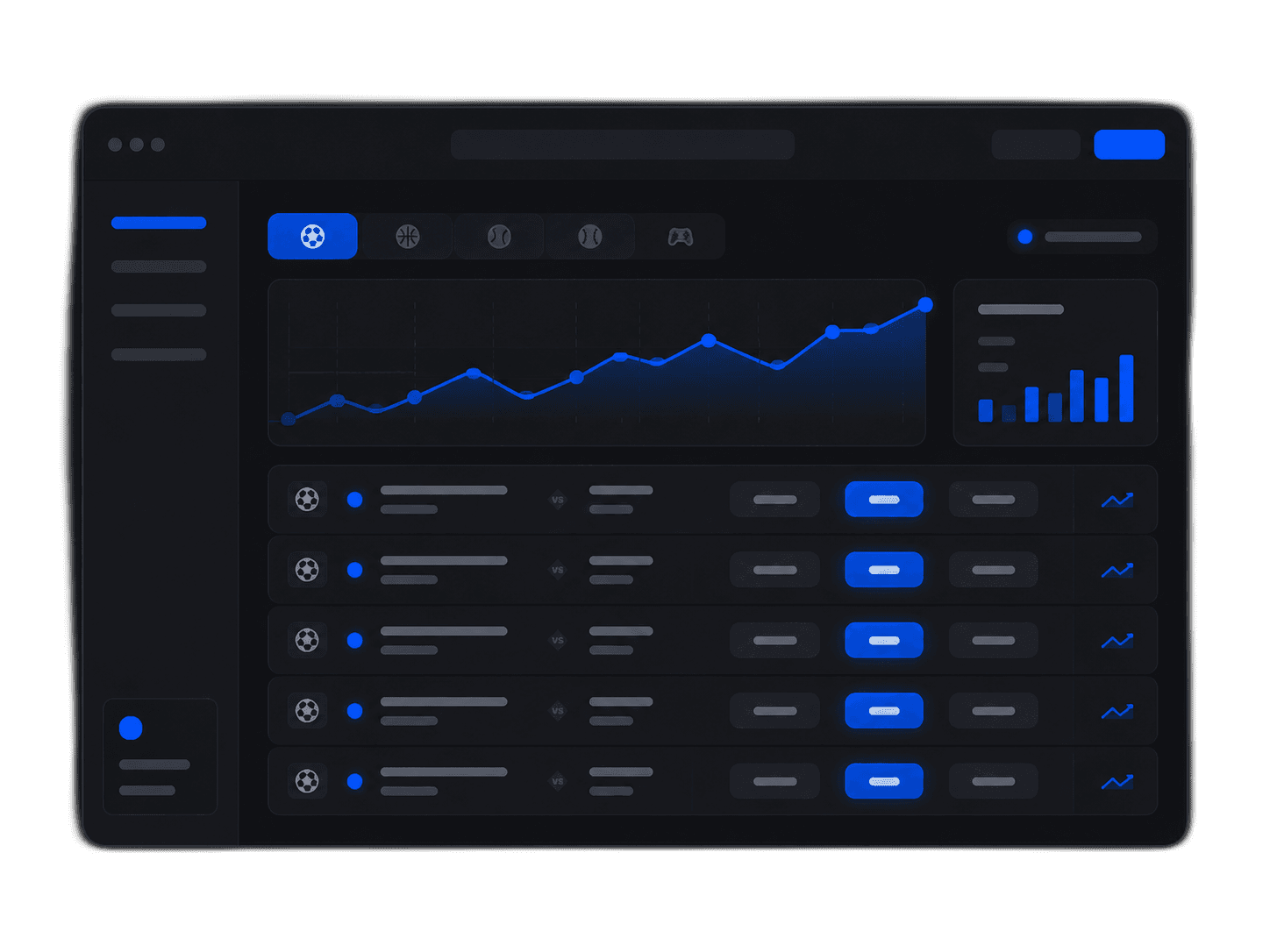
A sportsbook's revenue comes from the margin built into the odds, not from a separate fee. When two outcomes in a market carry the same real probability, fair odds would be symmetric; the operator shades both sides slightly inward, and that gap — the overround — turns into revenue on the volume wagered over time. That margin isn't uniform: single bets on big, heavily traded leagues tend to run tighter, while multi-bets, live markets, and niche competitions carry a wider margin, because a bettor's pricing error compounds with every added selection. The outcome is also unstable in the short run: a weekend where favorites sweep the board pays out many bets at once and can wipe out the period's result even when the odds were priced correctly. On the Nodrus sportsbook, per-market margin is set from the same panel that controls exposure limits, so price and risk get adjusted together instead of as separate decisions.
Risk management: the limits that keep a run of favorites from turning into a loss
A run of favorites winning in a row is every sportsbook's statistical nightmare: many single and multi-bets settle at the same time, and the operator pays out more than the theoretical margin priced in for that period. Without limits in place, that swing stops being expected variance and turns into uncontrolled exposure. That's what risk management is for: exposure limits per market, margins adjusted where betting volume runs highest, and alert rules that flag the operation when a market approaches its defined threshold. On the Nodrus sportsbook, these settings sit in one central panel, next to the trading controls that let staff suspend, adjust, or reopen a market manually when an event calls for it — an injury, a red card, a sudden turnaround. The practical effect: risk stops depending on a decision made under pressure mid-event, because the limits are already set before kickoff.
Live betting demands more than updated odds — it demands a real-time engine
Live betting changes what "updated" even means. In a pre-match market, the odds hold until kickoff; in a live market, they need to reflect what just happened on the field — a goal, a card, a break of serve — before the next play changes everything again. That takes an engine that reprices continuously through the match, suspends betting the instant an event calls for it, and settles as soon as the result is in, without manual reconciliation. It's a real-time dynamic, the same kind that underlies live-dealer casino games: any lag in repricing opens a pricing-error window, and any lag in settlement turns into a player complaint. On the Nodrus sportsbook, pre-match and live odds update automatically as the event unfolds, and cash out lets a player close a bet before it ends, within the rules the operator sets — the combination that makes live betting work as a product, not just a technical feature.
Why casino is the natural complement to sportsbook across the calendar
Sportsbook revenue follows the sports calendar, and that's a structural trait, not an operating flaw. Major competitions concentrate acquisition spikes and betting volume; between seasons, activity drops in a predictable pattern. Casino doesn't carry that off-season: revenue spreads far more evenly across the year, because it depends on recurring play behavior rather than an external event. That's why running both verticals together — rather than leaning on just one — tends to produce a steadier result than sports alone: casino sustains revenue through the sports calendar's quiet months, while sportsbook brings acquisition spikes that casino alone would struggle to generate. At Nodrus, sportsbook and casino run on the same player base and the same wallet, which makes it possible to see that balance — and how much of a player acquired through sports also plays casino — in a single view, instead of reconciling two separate systems.
A sportsbook doesn't run alone: wallet, CRM, and affiliates in one operation
A sportsbook that sits apart from the rest of the platform creates duplicate work: a separate balance, a separate report, a player treated as two different accounts depending on whether they bet on sports or casino. At Nodrus, sportsbook and casino share the same wallet and the same player base — one deposit serves both verticals, and a player's behavior in one shows up in the same backoffice that tracks the other. That matters beyond finance: the affiliate system tracks where a player came from regardless of which product they use first, and CRM and retention tools see the full history, not a slice of it. In practice, that's what sustains cross-sell between the verticals — the player who arrives through sports and starts playing casino, or the reverse — without reconciling data by hand across separate platforms. Configuring sports, leagues, and risk rules on the sportsbook is one step inside that single operation, not a parallel project.