Turnkey, whitelabel, or building it yourself: what actually changes?
In iGaming, the terms whitelabel and turnkey don't always mean the same thing from one provider to the next — some use them interchangeably, others draw the line at how much responsibility the operator takes on, such as holding its own license or signing direct contracts with providers. What matters in practice is understanding what each path requires from you. Building it yourself means constructing the platform from scratch, with an in-house engineering team, individual negotiations with every game and payment provider, and building the entire compliance layer on your own — a path to full control, at the cost of significant time, money, and risk. In a Nodrus turnkey operation, that build is already done: the platform, game catalog, payment methods, backoffice, and technical support arrive integrated and running, and the operator brings the brand, positioning, and business decisions.
What actually eats up launch time — and what a turnkey operation removes
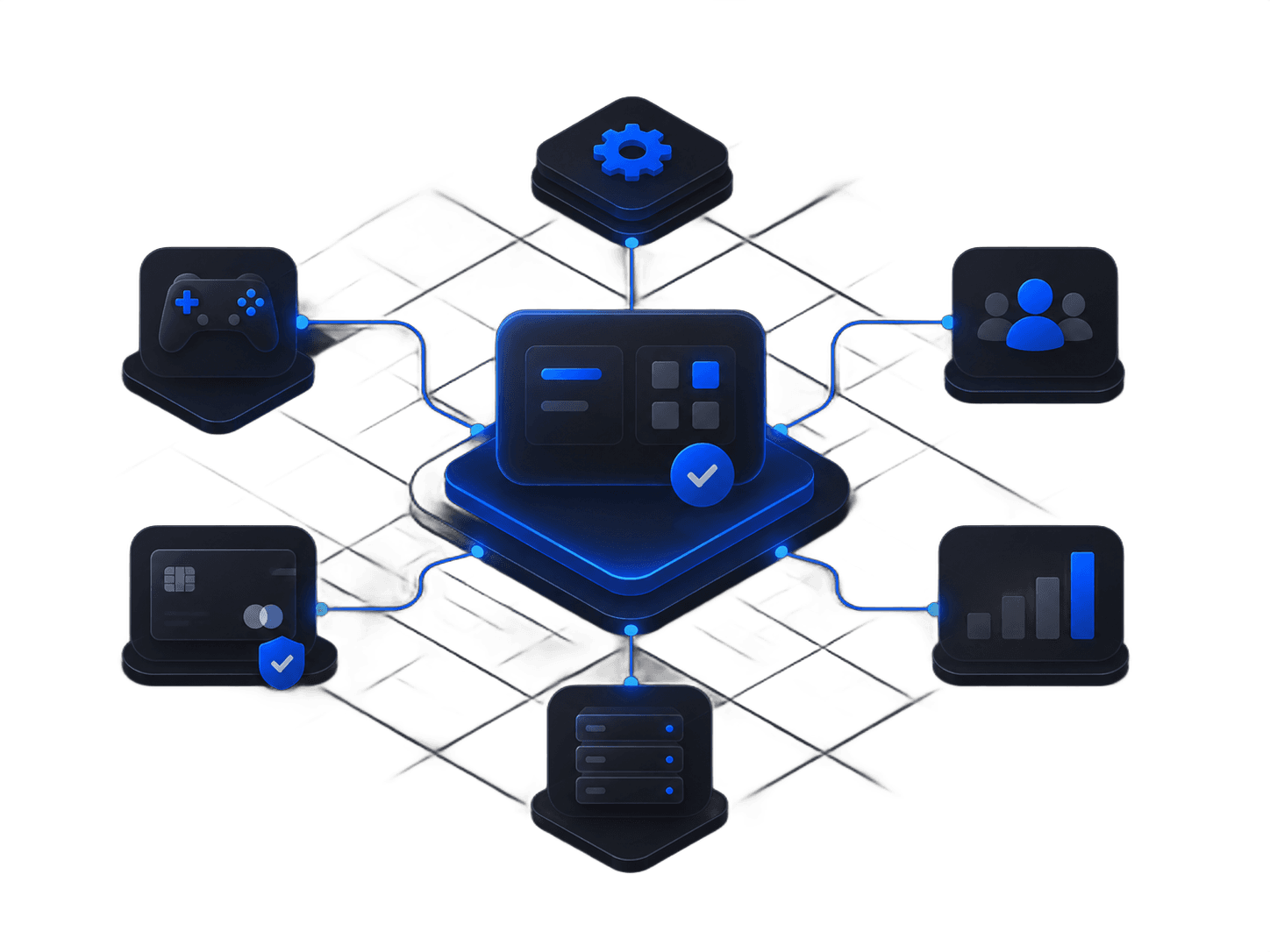
Anyone who has tried to launch a betting operation knows where the time goes: negotiating and integrating every game provider one by one, wiring up multiple payment gateways with fallback logic between them, building KYC and AML routines from the ground up, and only then organizing operator, admin, and support accounts inside a working backoffice. Each of these is its own technical project, and they rarely move in parallel. In a turnkey operation, that work is already done: the catalog arrives with 16+ casino, live dealer, and sports betting providers already connected, payment methods come already configured, the backoffice already exists with reports and administrative controls, and the account structure is organized before the first login. What's left for the operator is the part that actually differentiates the business: brand, positioning, and commercial decisions.
What to evaluate in a turnkey provider before signing
A turnkey proposal can look complete in a sales meeting and still leave gaps that only surface after the contract is signed. Worth checking with direct questions: how many game providers are genuinely active, and whether they cover casino, live dealer, and sports betting in a balanced way; how many payment gateways exist and what happens when one of them fails; whether KYC, AML, and responsible gambling tools already come embedded or depend on later integration; and whether the backoffice you receive already delivers usable reports and administrative controls from day one, not a stripped-down version. It's also worth understanding the commercial model clearly — fixed fee, revenue share, or a hybrid — and what base it's calculated on. Vague answers on these points usually signal a process that isn't standardized internally, and that tends to show up later in day-to-day operations.
How KYC, AML, and responsible gambling arrive already built in
Brazil's fixed-odds betting market has been regulated since 2025, under Law 14.790/2023 and the rules set by the Secretariat of Prizes and Betting under the Ministry of Finance. Operating there requires, at minimum, identity verification (KYC), anti-money-laundering routines (AML), and responsible gambling tools such as deposit limits and self-exclusion — building that layer from scratch is, on its own, a complex project with little room for error. In a turnkey operation, these routines already come embedded in the platform, evolving alongside the regulation instead of leaving the operator to manually track every new requirement. That doesn't remove the operator's own responsibility for the business's compliance, but it does remove the need to build and maintain this critical infrastructure in-house, which lowers legal and technical risk from the very first day of operation.
What changes in day-to-day operations once it goes live
Before launch, all the attention goes into configuring the platform, catalog, and payments. Once the operation goes live, day-to-day work shifts to something else entirely: reviewing financial and operational reports in the backoffice, managing the account structure for admins and support teams, and making commercial calls about brand, positioning, and player acquisition. Infrastructure maintenance stops being something the operator has to think about daily — the Nodrus technical team stays with the operation after launch, handling the platform's ongoing upkeep. In practice, this changes what kind of work fills the routine: instead of dealing with infrastructure, provider integrations, or platform availability, the operator deals with reporting, support, and business decisions — exactly what the operation was built to hand over from the start.