Revenue share, CPA, or hybrid: which commission model keeps an affiliate promoting?
The commission model is the single decision that shapes the relationship between operator and affiliate the most. Revenue share pays out a slice of the GGR generated by the players an affiliate brings in — industry norms typically land between 20% and 40% — and it aligns incentives directly: the affiliate only earns if the player keeps playing and losing over time, so they tend to chase quality traffic instead of raw volume. CPA pays a fixed amount per depositing player, regardless of what that player generates afterward; it suits affiliates who run paid traffic and need predictable cash flow per campaign, though it weakens the long-term incentive. A hybrid model blends both: a smaller CPA on first deposit plus an ongoing revenue share slice over the player's lifetime. On Nodrus, each plan can be configured per affiliate or per campaign, so operators can match the right model to each partner's profile instead of forcing one rule across the whole network.
Why does accurate subid tracking decide whether an affiliate keeps trusting the program?
For an affiliate, the whole relationship with a program comes down to one question: was my click counted correctly? When attribution breaks — a signup that never shows up, a deposit credited to the wrong affiliate, a link that drops its parameter on redirect — the affiliate simply stops promoting, because there's no reason to trust a program that can't measure its own traffic correctly. Subid tracking fixes this at the source: every affiliate generates links carrying an identifier that survives through to conversion, which separates performance by campaign, channel, or creative inside the same account. This matters on both sides. The operator sees which traffic channel actually converts and pays commission against reliable data. The affiliate sees, in real time, whether a creative is worth scaling or a channel needs replacing — without waiting on a manual report from the operator or relying on a third-party tracking tool.
How do sub-affiliates grow a program's reach without the operator recruiting alone?
A program that only pays direct referrals grows only as fast as the operator can recruit. Sub-affiliates change that math: an affiliate who's already active recruits other affiliates into their own network and earns a share of the commission those sub-affiliates generate, without cutting into what the sub-affiliates earn on their own traffic. That creates a growth layer that doesn't depend directly on the operator — anyone who's already proven they can drive qualified traffic gets a reason to bring more people into the program, because their earnings stop being capped by their own volume alone. It's the same model affiliates already recognize from other markets, and it runs inside the platform without needing a separate structure to manage sub-network commission. For the operator, the result is a network that grows on its own, with every layer staying invested in keeping the layers below it active and performing.
What does an affiliate need to see in the dashboard to keep spending on traffic?
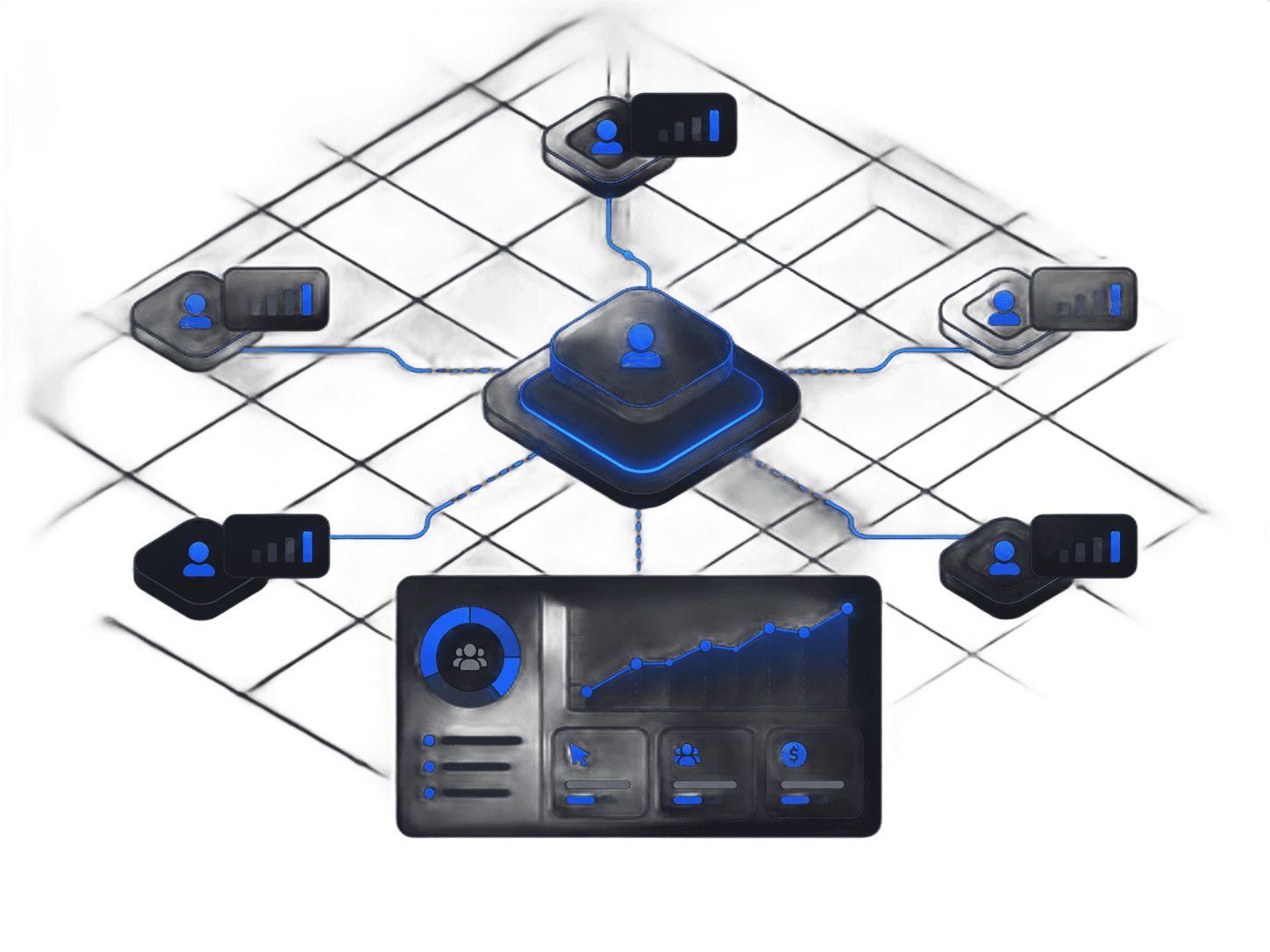
Affiliates don't promote on abstract trust — they promote on data they can check themselves. The baseline is seeing clicks, signups, deposits, and calculated commission in real time, without waiting on a manual report from the operator or reconciling a spreadsheet on the side. The next level is comparison: an affiliate running several campaigns or channels needs to see which subid is converting and which one is only generating clicks with no deposits, so they know where to shift paid traffic budget. The third is transparency in the approval flow — the affiliate needs to understand why an amount was adjusted or rejected, not just receive a final number with no explanation. A dashboard that delivers all three — real-time data, campaign-level comparison, and approval transparency — is what keeps a program's affiliates in place instead of losing the network to the first competitor offering better visibility.
How does the affiliate program connect to CRM and retention?
Affiliate traffic only turns into revenue if the referred player stays active — a signup that deposits once and never returns generates very little GGR, no matter which commission model is in place. That's why an affiliate program can't live isolated from the operation's CRM: the same player who arrived through an affiliate link needs to enter the same segmentation, reactivation, and bonus campaigns the operation uses to retain any other player. When affiliates and CRM sit on the same platform, an operator can judge an affiliate's contribution by more than the first deposit — by how that player behaves over time — which turns the commission conversation into one about traffic quality, not just volume. This connection matters to the affiliate too: revenue share commission only grows if the player is retained, so their interest lines up with the same retention work the operation is already doing.